
Partial Dentures vs Bridges: Which Is Better for Missing Teeth?
Missing teeth can affect much more than appearance. They can change the way you eat, speak, and smile in everyday situations. Even one missing tooth can lead to shifting teeth, uneven chewing pressure, and a noticeable drop in confidence over time.
Today, patients have several reliable options for replacing missing teeth, but partial dentures and dental bridges remain two of the most common choices. Each solution offers different benefits, and the right option depends on your oral health, lifestyle, and long-term goals.
Understanding Dentures and Dental Bridges
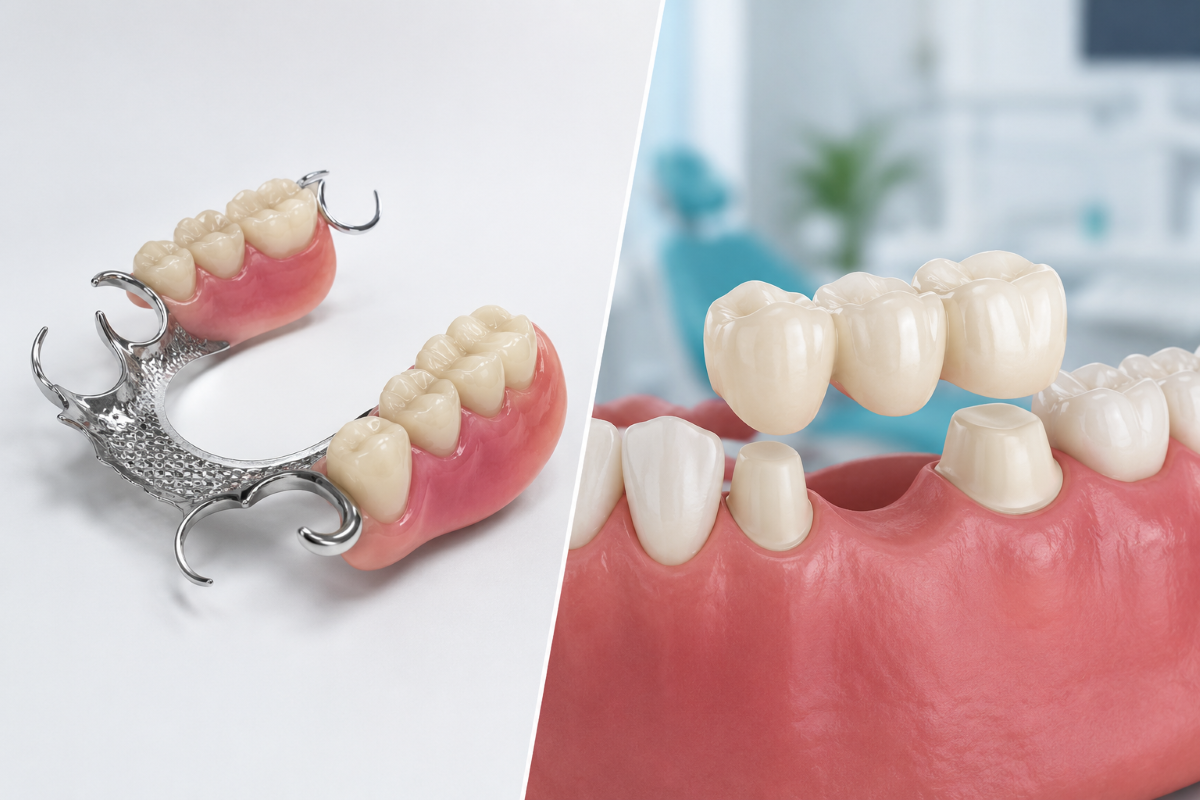
Dentures and dental bridges are both designed to restore missing teeth, but they work in different ways. Partial dentures are removable appliances that replace one or more missing teeth. A bridge, on the other hand, is fixed in place and supported by nearby teeth or implants.
Partial dentures are often recommended when multiple teeth are missing in different areas of the mouth. Bridges may work better when a smaller gap needs to be filled with a more permanent solution.
Both options aim to improve:
• Chewing ability
• Smile appearance
• Speech clarity
• Bite support
• Overall confidence
The best choice depends on how many teeth are missing and the condition of the surrounding teeth and gums.
What Are Partial Dentures?
They are removable dental appliances used to replace one or more missing teeth. They consist of replacement teeth attached to a gum-colored base, often supported by a metal framework that clips onto the surrounding natural teeth.
They are a practical and well-established solution for patients who still have healthy remaining teeth but have gaps that affect chewing, speech, and appearance.
Who Is a Good Candidate for Partial Dentures?
- Patients missing multiple teeth in different areas of the mouth
- Individuals who are not good candidates for invasive procedures
- Teens or seniors who need a non-surgical tooth replacement option
- Patients are looking for a solution that can be adjusted over time as their dental needs change
Key advantages include:
- No surgery required
- Can replace multiple missing teeth at once
- Removable for easy cleaning
- Can be adjusted or modified as needed
- Generally completed in fewer dental visits
What Are Dental Bridges?
A dental bridge is a fixed dental restoration that literally “bridges” the gap left by a missing tooth. It consists of an artificial tooth (called a pontic) anchored to the natural teeth on either side of the gap with dental crowns.
Unlike removable partials, bridges are permanently cemented in place and cannot be removed.
Who is a good candidate for a dental bridge?
- Patients missing one or two adjacent teeth
- Individuals with strong, healthy teeth on both sides of the gap to serve as anchors
- Patients who prefer a non-removable option
- Those who want a solution that closely mimics a natural tooth
Key advantages of dental bridges include:
- Fixed in place, no removal needed
- Natural-looking and comfortable
- Restores bite function effectively
- Does not require bone grafting
Partial Dentures vs Bridges: Key Differences at a Glance
| Feature | Partial Dentures | Dental Bridges |
| Removable? | Yes | No |
| Surgery required? | No | No |
| Number of teeth replaced | Multiple | One to two |
| Relies on adjacent teeth? | Clips onto nearby teeth | Requires crowns on anchor teeth |
| Adjustable over time? | Yes | Limited |
| Cleaning | Removed and cleaned separately | Brushing and flossing with a floss threader |
| Timeline | A few appointments | A few appointments |
Both options restore the appearance and function of your smile. The right choice depends entirely on your individual oral health, lifestyle, and goals.
What Makes Partial Dentures a Popular Option?
For many patients, partial dentures provide a flexible and cost-effective way to replace missing teeth without permanently altering healthy neighboring teeth.
Unlike dental bridges, partial dentures do not require nearby teeth to be filed down or covered with crowns. This makes them an attractive option for patients who want to preserve as much natural tooth structure as possible.
Partial dentures are also especially beneficial for:
- Patients with multiple missing teeth
- Older adults managing several dental concerns
- Younger patients whose oral health may continue to change over time
- Individuals seeking a non-invasive treatment option
Modern dentures are more natural-looking and comfortable than ever before, helping patients regain confidence while improving daily function.
How to Choose the Right Tooth Replacement Option
There is no one-size-fits-all solution when it comes to replacing missing teeth. Choosing between partial dentures and dental bridges depends on several important factors, including:
- The number and location of missing teeth
- The health of the surrounding teeth and gums
- Bone support and jaw health
- Your medical and dental history
- Lifestyle and comfort preferences
- Budget and long-term maintenance expectations
- Your smile goals
This is why a professional dental evaluation is essential.
During your consultation, your dentist will examine your oral health, review digital X-rays if necessary, and clearly and honestly explain all available treatment options. The goal is to help you make an informed decision that supports both your comfort and long-term oral health.
Restore Your Missing Teeth With Confidence in Kernersville
Living with missing teeth can impact daily comfort and confidence more than many people realize. The good news is that modern restorative dentistry offers dependable solutions tailored to your needs and goals.
At Modern Dental of Kernersville, we help patients explore customized options for replacing missing teeth with comfort and long-term function in mind. Visit our dental office in Kernersville to discover whether partial dentures or bridges may be the right fit for your smile.
Frequently Asked Questions (FAQs)
Q1. What is the main difference between partial dentures and dental bridges?
Partial dentures are removable appliances that replace one or more missing teeth and clip onto surrounding natural teeth. Dental bridges are fixed restorations permanently cemented in place using crowns on the neighboring teeth. The right choice depends on your oral health, the number of missing teeth, and your lifestyle needs.
Q2. Do partial dentures feel natural in the mouth?
Many patients adjust to these dental restorations within a few weeks. Modern dentures are designed to look and feel as natural as possible. Your care provider will ensure the fit is comfortable before you leave the office and will make any necessary adjustments during follow-up visits.
Q3. Will I need to change my diet with partial dentures?
In the beginning, eating softer foods while you adjust is recommended. Over time, most patients return to a normal diet. The dentist will share specific guidance based on your individual restoration.
Q4. Are dental bridges a permanent solution?
Dental bridges are fixed in place but are not considered a permanent solution. With proper care, a well-placed bridge can last 10 to 15 years or longer. Regular check-ups and good oral hygiene are key to keeping them in place.
Q5. Can I get partial dentures if I still have most of my natural teeth?
Yes, they are specifically designed for patients who still have healthy, natural teeth remaining. They fill in the gaps while working alongside your existing teeth to restore function and appearance.
Q6. At what age can someone get partial dentures or a dental bridge?
Both options are available for teens, adults, and seniors. The right timing depends on oral development and individual dental health. A thorough evaluation by your care provider will determine when and which option is appropriate for your age and condition.
Q7. How do I care for partial dentures at home?
Partial dentures should be removed and rinsed after meals, brushed daily with a soft brush and gentle cleanser (not regular toothpaste), and soaked overnight in a denture-safe solution. Regular dental check-ups ensure the fit remains comfortable and the appliance stays in good condition.
Q8. How do I know which option is right for me?
The only way to know for sure is through a full dental evaluation. Factors like the location and number of missing teeth, the health of surrounding teeth, and your overall oral health all play a role. A qualified care provider will review all of this with you and recommend the most appropriate solution for your specific situation.