
Why Does My Tooth Hurt When I Drink Something Cold?
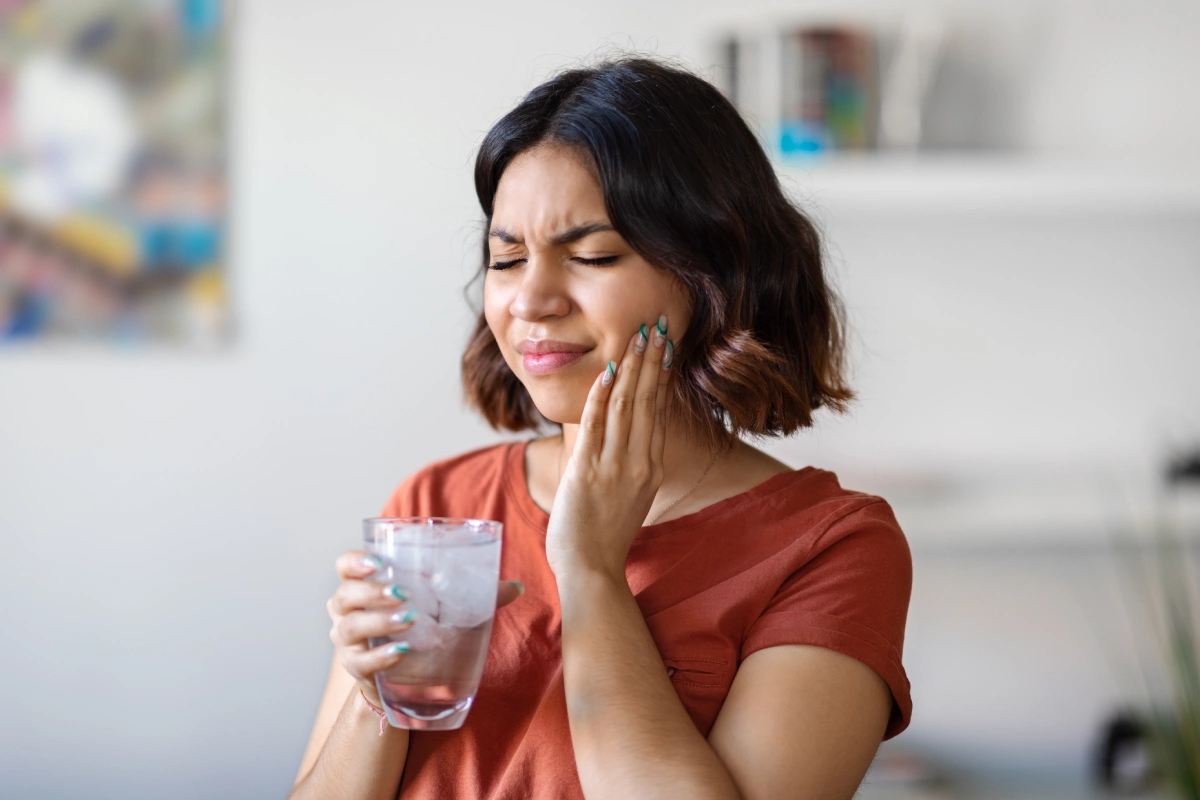
You take a sip of ice water, enjoy a cold drink, or eat a spoonful of ice cream, and suddenly one tooth sends a sharp jolt through your mouth. If you keep asking yourself, “Why does my tooth hurt when I drink something cold?” you are not alone.
Cold sensitivity can happen for several reasons. Sometimes it comes from exposed dentin or worn enamel. In other cases, it can signal a cavity, gum recession, a cracked tooth, or another dental concern that needs attention.
What Happens Inside a Sensitive Tooth?
Enamel protects the outside of each tooth. Underneath it is dentin, which contains microscopic channels that connect toward the inner part of the tooth. When dentin loses some of its protection, temperature changes can reach these channels and trigger the nerves inside the tooth.
That is why a cold drink can cause a sudden, sharp sensation rather than a dull ache.
Common Reasons Your Tooth Hurts From Cold
Worn Enamel
Enamel can gradually wear from acidic foods and drinks, aggressive brushing, or other sources of erosion. Once the protective layer becomes thinner, cold temperatures may reach the more sensitive layers underneath.
Receding Gums
Gum tissue protects the roots of your teeth. When gums recede, those roots can become exposed. Because root surfaces do not have the same enamel protection as the crown of a tooth, they can react strongly to cold foods and drinks.
A Cavity
Tooth decay can remain unnoticed while it is limited to the outer enamel. As decay reaches the dentin, cold drinks may trigger sensitivity or pain. A cavity can also cause discomfort with sweets or pressure.
A Cracked Tooth
Even a small crack can expose or irritate sensitive areas inside a tooth. You may notice a sharp response to cold, sometimes along with pain when chewing.
Recent Dental Treatment
Sensitivity can sometimes occur temporarily after dental treatment. If the discomfort continues, becomes stronger, or does not seem to be improving, an examination can help determine why.
If you are unsure what is causing your symptoms, talking with a dental professional can help identify the source instead of simply avoiding cold foods and drinks.
Does Cold Sensitivity Mean Something Is Wrong?
Not necessarily. Some people experience brief sensitivity when dentin becomes exposed. However, the pattern of your pain matters.
A quick sensation that disappears almost immediately may have a different cause from pain that continues after the cold drink is gone. Lingering pain can sometimes indicate irritation inside the tooth and deserves professional evaluation.
You should also pay attention to swelling, pain when biting, a persistent toothache, or other changes around the affected tooth.
How Can You Protect Sensitive Teeth?
Start with gentle daily care. Use a soft bristled toothbrush, avoid brushing with excessive pressure, and consider toothpaste formulated for sensitive teeth. Limiting frequent exposure to acidic foods and drinks can also help protect enamel.
Regular checkups matter too. Preventive care can help identify cavities, gum problems, enamel wear, and other concerns before they become more complicated. Learning about ways to protect your teeth and gums can also help you build better daily habits.
An oral health specialist can also recommend appropriate treatment when sensitivity continues despite changes to your routine.
Do Not Let Cold Sensitivity Become Your New Normal
If cold drinks regularly make you wince, finding out why can help you protect the affected tooth and your overall smile. Modern Dental of Kernersville can evaluate your symptoms and explain your treatment options. When you are ready, schedule an appointment with Modern Dental of Kernersville. You can also find the practice on Google Maps before your visit.
Frequently Asked Questions
1. Why does my tooth hurt when I drink something cold?
Cold can reach exposed dentin and stimulate the nerves inside the tooth. Enamel wear, gum recession, cavities, cracks, and gum problems can all contribute to sensitivity.
2. Is cold sensitivity normal?
Brief sensitivity can occur, but recurring or worsening pain should not be ignored. The underlying cause determines whether you simply need changes to your routine or professional treatment.
3. Why does the pain continue after I finish my cold drink?
Pain that lingers after cold exposure may indicate irritation deeper inside the tooth. A dentist can examine the tooth and determine what is causing the reaction.
4. Can sensitive teeth get better?
Mild sensitivity may improve with desensitizing toothpaste and gentler oral care. If a cavity, crack, gum recession, or another dental issue is responsible, treating the underlying problem may be necessary.